
Homeowner’s insurance may cover mold damage, but only when the mold resulted from a sudden, accidental covered event like a burst pipe or storm water intrusion. Mold from gradual leaks, flooding, or poor maintenance is almost always excluded. What matters isn’t the mold itself. It’s what caused the water.
Finding mold in your home is one of those moments where your stomach drops a little. Then, almost immediately, a second thought: is insurance going to cover this?
The honest answer is it depends. But that’s not a cop-out. There’s a clear logic to how insurance companies decide, and once you understand it, you’ll know pretty quickly whether you have a claim.
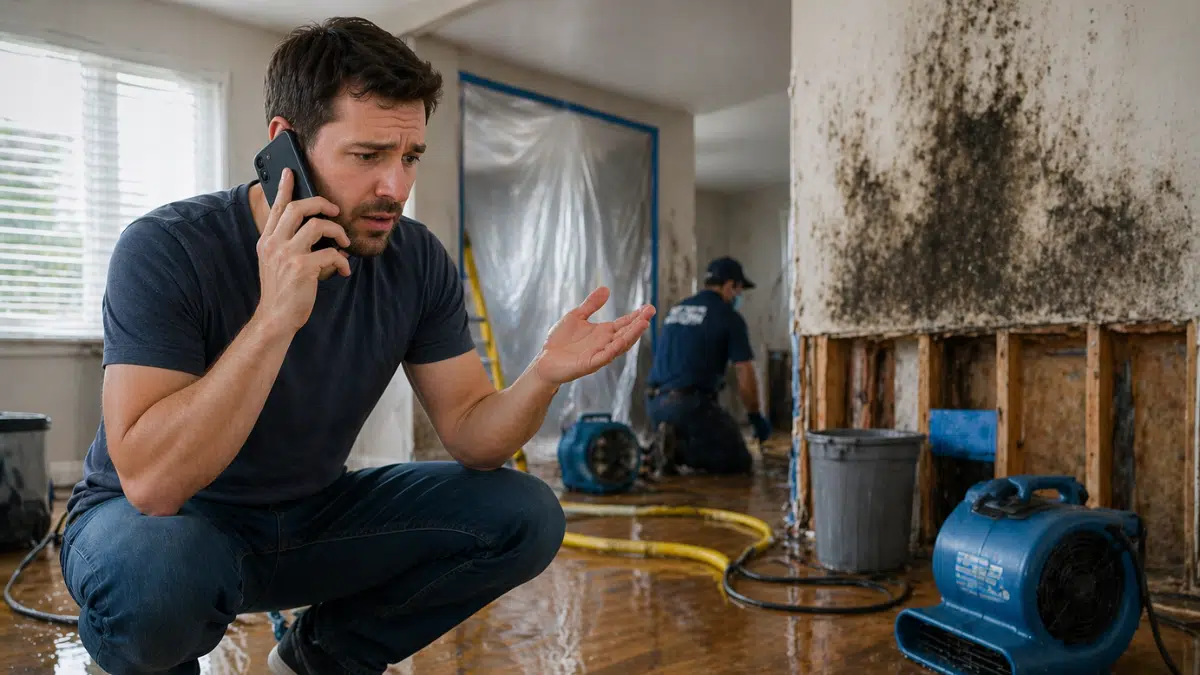
Here’s how it works.
When does homeowner’s insurance cover mold?
Your homeowner’s policy covers mold when it’s a direct result of a covered peril: a sudden, accidental water event you couldn’t have prevented. Mold isn’t a covered category on its own. Your insurer is paying for the damage caused by the underlying event, and mold remediation comes along for the ride.
Insurance policies are built around the concept of covered perils. When a sudden water event qualifies and mold develops directly from it, most standard policies treat remediation as part of the same claim. The connection between what triggered the water and what grew afterward has to be clear and documented.
Common scenarios where coverage often applies:
- A pipe burst unexpectedly and soaked a wall before you could catch it
- An appliance (dishwasher, washing machine, or water heater) leaked suddenly and water got into flooring or behind cabinets
- A storm damaged your roof or siding and water came in through the opening
In each case, the underlying event is typically covered. When mold follows directly from that event, most insurers fold the remediation into the same claim.
When doesn’t homeowner’s insurance cover mold?
Homeowner’s insurance almost always denies mold claims when the water source was gradual, preventable, or excluded from coverage. The four most common reasons: slow leaks treated as maintenance failures, external flooding, high indoor humidity or condensation, and known water intrusion that was never addressed.
Gradual leaks and slow moisture buildup. If a pipe has been dripping inside a wall for months and mold has been quietly growing, insurance will almost certainly treat that as a maintenance failure. Policies exist to cover sudden events, not slow-moving problems you could have caught.
Flooding. Standard homeowner’s policies don’t cover flood damage. If water came in from outside, whether from a storm surge, an overflowing creek, or heavy rain runoff, you’d need separate flood insurance. That applies to any mold that follows, too.
High humidity and condensation. Mold from consistently high indoor humidity, poor ventilation, or condensation around HVAC systems and crawl spaces is generally treated as a maintenance issue. The insurer’s position: you could have prevented it.
Neglected repairs. If there was a known leak that wasn’t fixed, and mold grew as a result, that’s almost never covered.
What should I look for in my homeowner’s insurance policy?
Search your policy for exclusion language around “mold,” “fungus,” or “microorganism.” These exclusions are increasingly standard. Even policies with some mold coverage typically impose a sublimit, a separate dollar cap on remediation that ranges from $1,000 to $10,000 in most standard policies, regardless of your overall dwelling limit.
Mold exclusions became common practice after a wave of large mold-related claims in the early 2000s. Most insurance companies today either exclude mold outright or attach a sublimit. According to industry sources, caps of $5,000 to $10,000 are most common in standard homeowner’s policies, though some go as low as $1,000. Enhanced endorsements, available for an additional premium, can raise that limit to $10,000 or $50,000 depending on the insurance company.
If your policy language is unclear, call your agent and ask directly: “If mold develops as a result of a covered water event, is the remediation covered, and is there a sublimit?” A direct question usually gets a direct answer.
What steps should I take to file a mold insurance claim?
If your mold traces back to a covered event, move fast. Document everything before touching anything, call your insurer before starting remediation, and get a written assessment from a licensed professional. The EPA notes that mold can begin growing within 24 to 48 hours of a water event. Most policies also have a prompt-reporting requirement, and missing it can cost you the claim.
Document before you clean anything. Take photos and video of the mold, the water source, and any related damage. The more clearly you can show the connection between the water event and the mold, the stronger your claim.
Call your insurer before you start remediation. Starting work before your insurer has seen the damage can complicate or void your claim. Let them send an adjuster first, or get verbal approval before you proceed.
Get a written assessment from your remediation company. A professional assessment documenting the source, extent, and likely cause of the mold gives your insurer something concrete to work from, and gives you a paper trail if there’s ever a dispute.
Report promptly. Most policies require damage to be reported within a reasonable timeframe. Waiting too long gives the insurer a reason to deny.
Frequently asked questions
Black mold (often Stachybotrys chartarum) isn’t treated any differently than other mold types by most insurance policies. What matters is the cause, not the species. If the mold resulted from a covered peril, remediation may be covered regardless of the type.
Yes. Most policies require prompt reporting. If you discovered mold months ago and are just now filing a claim, the insurer may argue the delay worsened the damage and deny coverage on those grounds. Don’t sit on it.
Standard National Flood Insurance Program (NFIP) policies generally don’t cover mold damage. The one narrow exception is if officials restricted access to your home during the flood event, making it genuinely impossible to begin drying and cleanup. If access wasn’t restricted, mold that grows because the property wasn’t dried out quickly enough is typically excluded. Private flood insurance policies may vary, so check your specific policy.
If mold developed as a result of work done during a covered repair (say, a wall was closed back up before everything dried out), that’s worth raising with your insurer. Document it clearly and make the case that it connects to the original covered event.
Start by requesting a written explanation. Review your policy to see if you agree with their reading of it. If you think they got it wrong, you can file a formal appeal or, in some cases, request an independent appraisal. A public adjuster can also help you push back.
It depends heavily on the size of the problem and how accessible the affected area is. Small, contained jobs can run a few hundred dollars. Larger situations involving walls, attics, or crawl spaces often reach several thousand. Get a clear written estimate before any work begins so you know what you’re dealing with.
The bottom line
Whether or not insurance comes through for you, the mold itself is a solvable problem. If you’re in the Austin area and want a straight answer on what you’re dealing with and what it’ll take to fix it, we’re happy to take a look. No pressure, no surprises, just honest information so you can make the best decision for your home. Contact us today!